
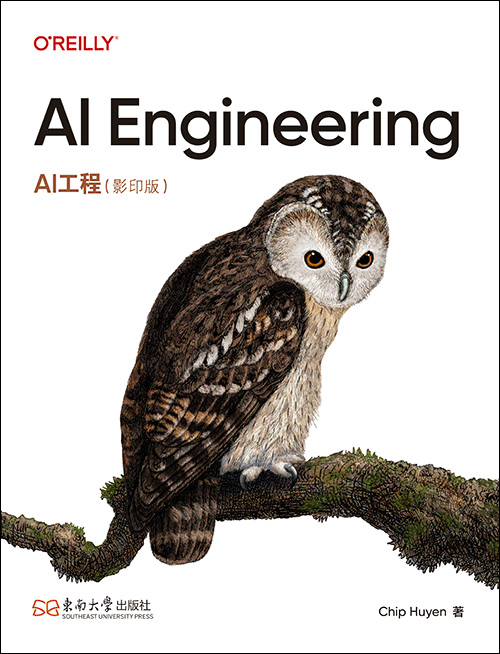
AI工程(影印版)
出版时间:2025年04月
页数:509
“这本书为构建生成式AI系统的关键方面提供了全面且结构清晰的指南。对于任何希望在企业中大规模推广AI的专业人士来说,这是一本必读之作。”
——Vittorio Cretella
前宝洁(P&G)与玛氏(Mars)全球首席信息官
“Chip Huyen对生成式AI有着深刻的理解。她是一位出色的教师和作家,其工作成果在帮助团队将AI推向生产环境方面发挥了重要作用。凭借她的深厚专业知识,本书为构建生产环境中的生成式AI应用提供了全面综合指南。”
——Luke Metz
ChatGPT共创人,OpenAI前研究经理
基础模型开启了众多全新的AI应用场景,降低了构建AI产品的门槛。这将AI从一门晦涩难懂的学科转变为一种强大的开发工具,即使是没有AI经验的人也能使用。
在这本通俗易懂的指南中,作者Chip Huyen探讨了AI工程的概念:利用现成的基础模型构建应用的过程。AI应用开发者将学习如何驾驭人工智能领域,包括模型、数据集、评估基准以及看似无穷无尽的应用模式。书中还介绍了一个用于开发AI应用并高效部署的实用框架。
● 理解AI工程的概念及其与传统机器学习工程的区别
● 学习AI应用的开发过程,了解每个步骤中的挑战及其解决方法
● 探索各种模型适配技术,包括提示工程、RAG、微调、智能体以及数据集工程,并理解其原理及应用场景
● 分析基础模型在延迟和成本方面的瓶颈,学习克服这些问题的方法
● 根据需求选择合适的模型、评估指标、数据、开发模式
——Vittorio Cretella
前宝洁(P&G)与玛氏(Mars)全球首席信息官
“Chip Huyen对生成式AI有着深刻的理解。她是一位出色的教师和作家,其工作成果在帮助团队将AI推向生产环境方面发挥了重要作用。凭借她的深厚专业知识,本书为构建生产环境中的生成式AI应用提供了全面综合指南。”
——Luke Metz
ChatGPT共创人,OpenAI前研究经理
基础模型开启了众多全新的AI应用场景,降低了构建AI产品的门槛。这将AI从一门晦涩难懂的学科转变为一种强大的开发工具,即使是没有AI经验的人也能使用。
在这本通俗易懂的指南中,作者Chip Huyen探讨了AI工程的概念:利用现成的基础模型构建应用的过程。AI应用开发者将学习如何驾驭人工智能领域,包括模型、数据集、评估基准以及看似无穷无尽的应用模式。书中还介绍了一个用于开发AI应用并高效部署的实用框架。
● 理解AI工程的概念及其与传统机器学习工程的区别
● 学习AI应用的开发过程,了解每个步骤中的挑战及其解决方法
● 探索各种模型适配技术,包括提示工程、RAG、微调、智能体以及数据集工程,并理解其原理及应用场景
● 分析基础模型在延迟和成本方面的瓶颈,学习克服这些问题的方法
● 根据需求选择合适的模型、评估指标、数据、开发模式
- Preface
- 1. Introduction to Building AI Applications with Foundation Models
- The Rise of AI Engineering
- Foundation Model Use Cases
- Planning AI Applications
- The AI Engineering Stack
- Summary
- 2. Understanding Foundation Models
- Training Data
- Modeling
- Post-Training
- Sampling
- Summary
- 3. Evaluation Methodology
- Challenges of Evaluating Foundation Models
- Understanding Language Modeling Metrics
- Exact Evaluation
- AI as a Judge
- Ranking Models with Comparative Evaluation
- Summary
- 4. Evaluate AI Systems
- Evaluation Criteria
- Model Selection
- Design Your Evaluation Pipeline
- Summary
- 5. Prompt Engineering
- Introduction to Prompting
- Prompt Engineering Best Practices
- Defensive Prompt Engineering
- Summary
- 6. RAG and Agents
- RAG
- Agents
- Memory
- Summary
- 7. Finetuning
- Finetuning Overview
- When to Finetune
- Memory Bottlenecks
- Finetuning Techniques
- Summary
- 8. Dataset Engineering
- Data Curation
- Data Augmentation and Synthesis
- Data Processing
- Summary
- 9. Inference Optimization
- Understanding Inference Optimization
- Inference Optimization
- Summary
- 10. AI Engineering Architecture and User Feedback
- AI Engineering Architecture
- User Feedback
- Summary
- Epilogue
- Index
书名:AI工程(影印版)
作者:Chip Huyen 著
国内出版社:东南大学出版社
出版时间:2025年04月
页数:509
书号:978-7-5766-2004-7
原版书书名:AI Engineering
原版书出版商:O'Reilly Media
The animal on the cover of AI Engineering is an Omani owl (Strix butleri), a so-called “earless owl” native to Oman, Iran, and the UAE.
An owl collected in 1878 was dubbed Strix butleri after its discoverer, ornithologist Colonel Edward Arthur Butler. This bird was commonly known as Hume’s owl and it was thought to be widespread throughout the Middle East.
In 2013, a previously unknown species of owl was discovered in Oman and given the name Strix omanensis, the Omani owl. No physical specimen was collected, but the owl was described from photographs and sound recordings. Then, in 2015, an analysis of the Strix butleri holotype (the original specimen found in 1878) revealed that the owl was actually the same as Strix omanensis, and distinct from the more common owl found throughout the Middle East. Following naming conventions, the species kept the original name Strix butleri and the more common owl was given the name Strix hadorami, the desert owl.
The Omani owl has a pale and dark gray face and orange eyes. Its upperparts are a dark grayish brown and its underparts are pale gray with narrow dark streaks. It’s a medium-sized owl with a round head and no ear tufts. As a relatively new discovery, ornithologists are still researching the owl’s behavior, ecology, and distribution.
The IUCN conservation status of the Omani owl is data deficient. Many of the animals on O’Reilly covers are endangered; all of them are important to the world.
An owl collected in 1878 was dubbed Strix butleri after its discoverer, ornithologist Colonel Edward Arthur Butler. This bird was commonly known as Hume’s owl and it was thought to be widespread throughout the Middle East.
In 2013, a previously unknown species of owl was discovered in Oman and given the name Strix omanensis, the Omani owl. No physical specimen was collected, but the owl was described from photographs and sound recordings. Then, in 2015, an analysis of the Strix butleri holotype (the original specimen found in 1878) revealed that the owl was actually the same as Strix omanensis, and distinct from the more common owl found throughout the Middle East. Following naming conventions, the species kept the original name Strix butleri and the more common owl was given the name Strix hadorami, the desert owl.
The Omani owl has a pale and dark gray face and orange eyes. Its upperparts are a dark grayish brown and its underparts are pale gray with narrow dark streaks. It’s a medium-sized owl with a round head and no ear tufts. As a relatively new discovery, ornithologists are still researching the owl’s behavior, ecology, and distribution.
The IUCN conservation status of the Omani owl is data deficient. Many of the animals on O’Reilly covers are endangered; all of them are important to the world.
购买选项
|
© 2026,奥莱利技术咨询(北京)有限公司。版权所有。 传真: +86-10-88097463 京ICP备05003502号 |
|