
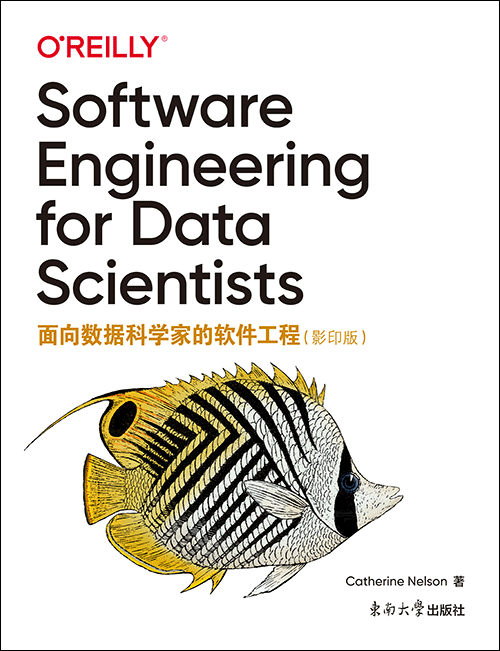
面向数据科学家的软件工程(影印版)
出版时间:2025年02月
页数:238
“Catherine的书揭示了如何将个人工作扩展到生产规模。无论你是数据科学家、开发人员还是高管,她都让大规模的数据服务变得易于理解。”
——Carol Willing
Python核心开发者,因Jupyter对行业的持久影响而获2017年ACM软件系统奖
“这本书提供了清晰且可操作的指南,填补了许多数据科学家在软件工程方面的关键技能缺口,将他们的编码实践提升到了新的高度。”
——Gabriela de Queiroz
微软AI部门总监,创业顾问和天使投资人
数据科学离不开代码。编写可复现、稳健、可伸缩代码的能力是数据科学项目成功的关键,对于那些和生产代码打交道的人来说,这一点至关重要。这本实用书籍填补了数据科学与软件工程之间的空白,清晰地解释了如何将软件工程的最佳实践应用于数据科学。
本书提供的示例基于Python,取材于NumPy和pandas等流行的包。如果你想编写更好的数据科学代码,本指南涵盖了数据科学入门或编码课程中经常缺失的重要主题,包括如何:
● 理解数据结构和面向对象编程
● 清晰且熟练地记录代码
● 打包并共享你的代码
● 将数据科学代码集成到更大的代码库中
● 学习编写API
● 创建安全的代码
● 将最佳实践应用于测试、错误处理、日志记录等常见任务
● 更高效地与软件工程师合作
● 编写更高效、可维护、稳健的Python代码
● 将你的数据科学项目投入生产
● 等等
——Carol Willing
Python核心开发者,因Jupyter对行业的持久影响而获2017年ACM软件系统奖
“这本书提供了清晰且可操作的指南,填补了许多数据科学家在软件工程方面的关键技能缺口,将他们的编码实践提升到了新的高度。”
——Gabriela de Queiroz
微软AI部门总监,创业顾问和天使投资人
数据科学离不开代码。编写可复现、稳健、可伸缩代码的能力是数据科学项目成功的关键,对于那些和生产代码打交道的人来说,这一点至关重要。这本实用书籍填补了数据科学与软件工程之间的空白,清晰地解释了如何将软件工程的最佳实践应用于数据科学。
本书提供的示例基于Python,取材于NumPy和pandas等流行的包。如果你想编写更好的数据科学代码,本指南涵盖了数据科学入门或编码课程中经常缺失的重要主题,包括如何:
● 理解数据结构和面向对象编程
● 清晰且熟练地记录代码
● 打包并共享你的代码
● 将数据科学代码集成到更大的代码库中
● 学习编写API
● 创建安全的代码
● 将最佳实践应用于测试、错误处理、日志记录等常见任务
● 更高效地与软件工程师合作
● 编写更高效、可维护、稳健的Python代码
● 将你的数据科学项目投入生产
● 等等
- Preface
- 1. What Is Good Code?
- Why Good Code Matters
- Adapting to Changing Requirements
- Simplicity
- Modularity
- Readability
- Performance
- Robustness
- Key Takeaways
- 2. Analyzing Code Performance
- Methods to Improve Performance
- Timing Your Code
- Profiling Your Code
- Time Complexity
- Key Takeaways
- 3. Using Data Structures Effectively
- Native Python Data Structures
- NumPy Arrays
- pandas DataFrames
- Key Takeaways
- 4. Object-Oriented Programming and Functional Programming
- Object-Oriented Programming
- Functional Programming
- Which Paradigm Should I Use?
- Key Takeaways
- 5. Errors, Logging, and Debugging
- Errors in Python
- Logging
- Debugging
- Key Takeaways
- 6. Code Formatting, Linting, and Type Checking
- Code Formatting and Style Guides
- Linting
- Type Checking
- Key Takeaways
- 7. Testing Your Code
- Why You Should Write Tests
- When to Test
- How to Write and Run Tests
- Types of Tests
- Data Validation
- Testing for Machine Learning
- Key Takeaways
- 8. Design and Refactoring
- Project Design and Structure
- Code Design
- From Notebooks to Scalable Scripts
- Refactoring
- Key Takeaways
- 9. Documentation
- Documentation Within the Codebase
- Documentation in Jupyter Notebooks
- Documenting Machine Learning Experiments
- Key Takeaways
- 10. Sharing Your Code: Version Control, Dependencies, and Packaging
- Version Control Using Git
- Dependencies and Virtual Environments
- Python Packaging
- Key Takeaways
- 11. APIs
- Calling an API
- Creating Your Own API Using FastAPI
- Key Takeaways
- 12. Automation and Deployment
- Deploying Code
- Automation Examples
- Cloud Deployments
- Key Takeaways
- 13. Security
- What Is Security?
- Security Risks
- Security Practices
- Security for Machine Learning
- Key Takeaways
- 14. Working in Software
- Development Principles and Practices
- Roles in the Software Industry
- Community
- Key Takeaways
- 15. Next Steps
- The Future of Code
- Your Future in Code
- Thank You
- Index
书名:面向数据科学家的软件工程(影印版)
作者:Catherine Nelson 著
国内出版社:东南大学出版社
出版时间:2025年02月
页数:238
书号:978-7-5766-1767-2
原版书书名:Software Engineering for Data Scientists
原版书出版商:O'Reilly Media
The animal on the cover of Software Engineering for Data Scientists is a threadfin butterflyfish (Chaetodon auriga), a vibrantly colored fish of the Indo-Pacific coral reefs.
Growing up to nine inches long, its body is adorned with a striking pattern of white with black chevrons and a bright yellow backside. A black band runs through its eye, and its dorsal fin boasts a prominent black spot with a trailing filament, which gives this fish its name. The thread-like fin itself develops as the fish ages, with the fifth and sixth rays of its dorsal fin fusing together to form the long, trailing thread.
These active butterflyfish are most often seen in pairs, flitting amongst the coral reefs, lagoons, and outer reef environments. They use their elongated snouts to poke into crevices, searching for food (a varied diet of worms, mollusks, sponges, algae, and even soft corals).
While generally peaceful towards other fish, threadfin butterflyfish can be territorial with their own kind, especially in smaller aquariums. They are shy fish and appreciate plenty of hiding places within the reef.
The threadfin butterflyfish is listed as a species of Least Concern by the IUCN.
Growing up to nine inches long, its body is adorned with a striking pattern of white with black chevrons and a bright yellow backside. A black band runs through its eye, and its dorsal fin boasts a prominent black spot with a trailing filament, which gives this fish its name. The thread-like fin itself develops as the fish ages, with the fifth and sixth rays of its dorsal fin fusing together to form the long, trailing thread.
These active butterflyfish are most often seen in pairs, flitting amongst the coral reefs, lagoons, and outer reef environments. They use their elongated snouts to poke into crevices, searching for food (a varied diet of worms, mollusks, sponges, algae, and even soft corals).
While generally peaceful towards other fish, threadfin butterflyfish can be territorial with their own kind, especially in smaller aquariums. They are shy fish and appreciate plenty of hiding places within the reef.
The threadfin butterflyfish is listed as a species of Least Concern by the IUCN.
购买选项
|
© 2026,奥莱利技术咨询(北京)有限公司。版权所有。 传真: +86-10-88097463 京ICP备05003502号 |
|